
KEETA SPEC ADVERT
The Vision
The commercial was centered around Keeta, a food delivery service that strongly associates itself with technology, speed, and efficiency. From the very beginning, I knew I did not want to approach the brand in a conventional or grounded manner. Instead, I wanted to elevate the narrative into a heightened visual space. This led me to present Keeta through a science-fiction lens, imagining one of their delivery riders delivering food in space to an astronaut.
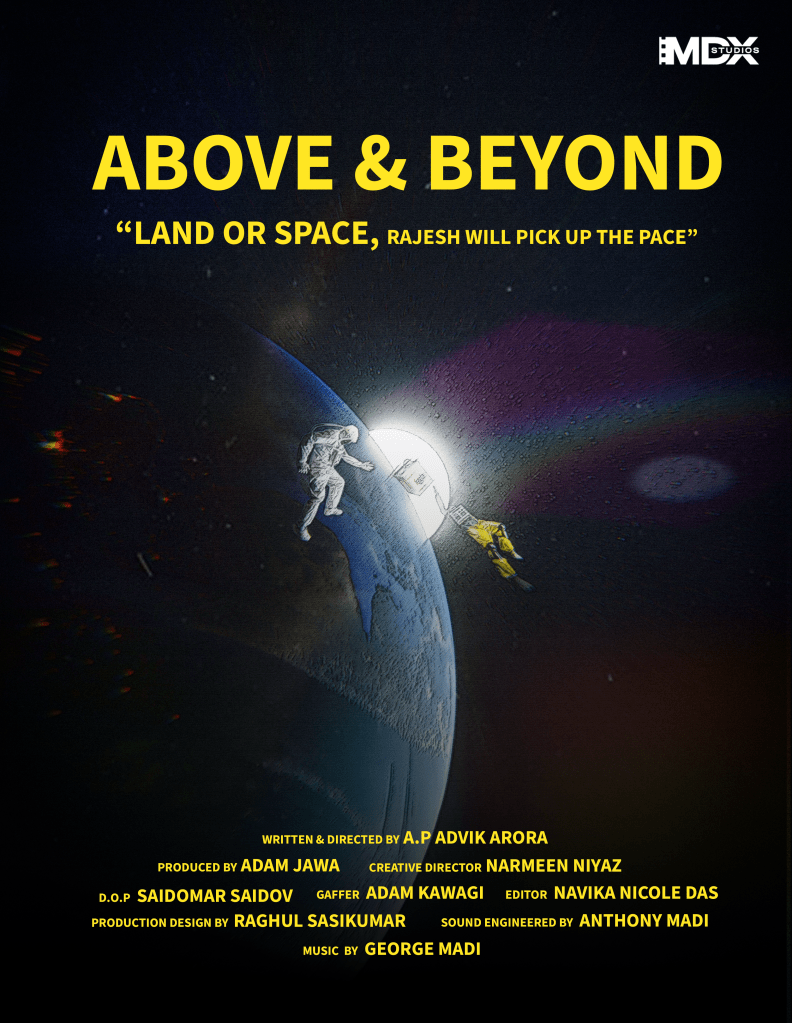
The concept felt naturally aligned with Keeta’s identity of pushing boundaries through technology. Initially, my plan was to execute the project using Virtual Production, as it would have allowed us to achieve the most seamless and immersive result. However, due to time and budget limitations, we pivoted toward more practical, DIY-driven solutions while still retaining the ambition and scale of the idea.
Because of the technical and narrative complexity of the project, I brought each Head of Department into the process very early in pre-production, including my Editor and Sound Engineer. This ensured that every department was aligned with the vision from the start and allowed us to problem-solve collaboratively rather than reactively.
Script, Storyboarding, and Editorial Planning
Once the script was finalized, the Director of Photography and I broke it down into a detailed shot list that directly responded to the narrative beats. From there, we developed a storyboard that aligned precisely with the planned shots. Simultaneously, my Editor and I finalized the shot durations and built a rough edit purely based on the storyboard.
The D.O.P, Editor, and I collectively locked the duration of each shot before stepping on set. This decision was heavily influenced by my observation of Keeta’s previous campaigns, which relied on fast-paced editing. I wanted to take a contrasting approach by introducing a more controlled and deliberate pacing. Locking the storyboard and edit structure early ensured that the rhythm of the ninety-second commercial remained consistent and cinematic throughout production.
Sound Design
Based on the storyboard-driven edit, the Sound Engineer and I began recording certain sound effects during pre-production itself. From the outset, we envisioned that every sound effect would be recorded through foley rather than relying on stock sounds. This approach gave us greater creative control and allowed us to experiment with texture, rhythm, and exaggeration in sound, which supported the dramatic and cinematic tone of the commercial.
Working with Actors
In parallel, I conducted three acting workshops with my main actor, Sadiq, who plays the delivery rider. These sessions focused on developing the character’s physicality and internal logic. We quickly connected the delivery rider to the idea of a cartoon clown navigating chaos while remaining deeply aware of his surroundings. This helped establish a balance between surrealism and realism, which became central to the tone of the film. The performance needed to feel theatrical without becoming detached from reality, and the workshops allowed us to arrive at that balance before production.
Visual and Production Design Approach
From a visual standpoint, I always envisioned the advertisement through a dramatic cinematic lens. This informed every creative decision, including shooting in a 2.35:1 aspect ratio, using orchestral music, stylized lighting, heightened production design, and theatrical performances. These choices allowed Keeta to be presented through a lens that felt grand, cinematic, and distinct from traditional food delivery advertisements.
The Production Designer played a crucial role in shaping this visual identity. Alongside me, they modeled and textured the digital environments in Blender, which allowed us to align on material choices and surface qualities early on. Our intention was for the production design to feel intentionally low quality and slightly artificial. This approach added to the comedic and quirky tone of the commercial and helped prevent the sci-fi aesthetic from becoming overly serious or polished.
Technical Tests and Pre-Production Experiments
Due to logistical constraints, we were unable to secure our desired location and instead shot in a compact time studio. Prior to the shoot, we conducted a miniature mock setup using Lego minifigures and green paper to test blocking and spatial composition. This test revealed significant green spill issues on the white astronaut suits and keying complications due to the Keeta space costume being green in color.
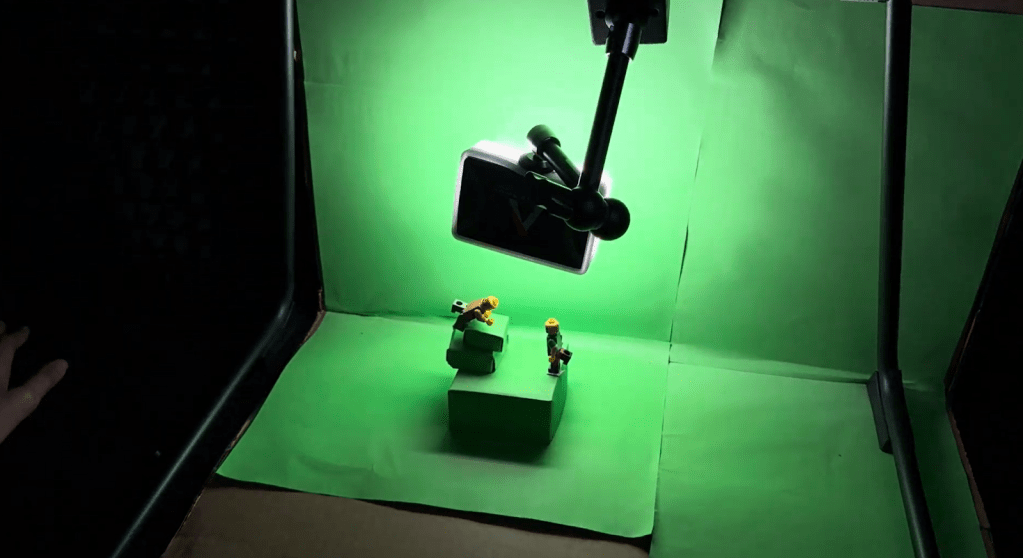
As a result, we made the decision to switch from green screen to blue screen for production. We also conducted technical recces for other sequences, including testing our primary Snorricam rig to ensure its stability and functionality.
Throughout this phase, I was aware that the project demanded an unusually strong pre-production pipeline. As a result, we initiated as much post-production work as possible during pre-production. This included building the virtual environments, creating a rough edit timeline based on the storyboard, beginning sound design and music composition, and developing a preliminary LUT for color that would later be applied to the final footage.
Production
We divided the shooting schedule into two distinct segments to manage time efficiently and address the technical demands of each setup.
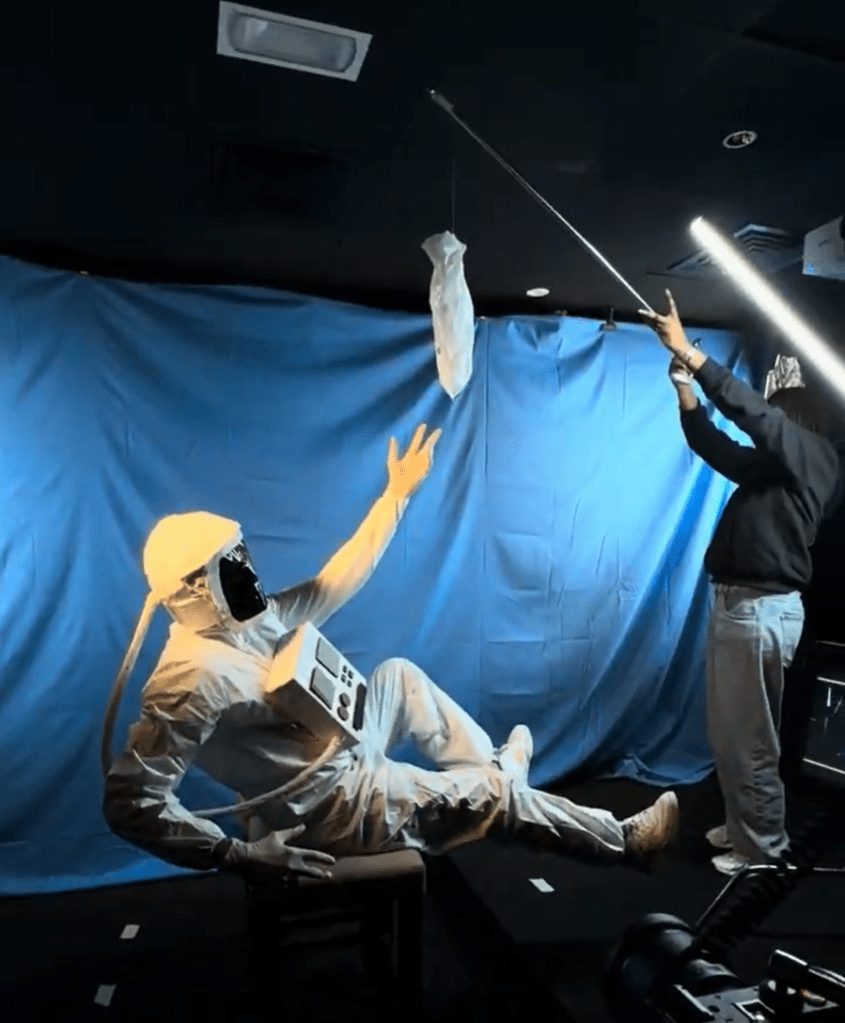
On the first day of the shoot, I prioritized capturing the studio shots against the blue screen. This was done deliberately so I could experiment with shooting the actors in individual plates as well as together in a single plate. Adequate time for this experimentation was discussed and locked with my First Assistant Director during pre-production. As a result, I shot the same master setup in two ways, once with individual actor plates and once with both actors together.
To ensure accurate eyelines, particularly for the delivery bag, we suspended a plastic bag using string tied to a C-stand. This allowed us to precisely adjust the height and position so the actors’ eye lines matched consistently across plates.
For the live-action street sequences, we planned our locations strategically so that the same location could be used twice to depict two different streets. By changing angles and cheating geography, we were able to maximize efficiency while maintaining visual variety.
Post-Production
The post-production workflow followed a structured pipeline established during pre-production. We began with a rough cut that combined the live-action footage with the blue screen plates. From there, we rotoscoped and keyed out the actors, compositing individual plates together into single frames where required.
The initial keying was completed in After Effects, with each frame rendered as a PNG sequence. These image sequences were then imported into Blender, which only accepts image sequences. Since we had already blocked the actors’ positions in the virtual environments during pre-production using digital characters, the process in post was primarily a replacement workflow, swapping the digital characters with the keyed live-action plates.
Once compositing was complete, the shots were rendered again as PNG sequences in a filmic log color profile and imported into DaVinci Resolve. The Colorist then graded the footage, ensuring consistency between the CGI-heavy shots and the live-action material.
Parallel to this process, the Sound Engineer and Music Composer finalized the sound effects and score, delivering them as WAV files that were integrated into the edit before the final render.
What Could Be Improved
I believe there is always scope for improvement. As someone who has always been fascinated by science-fiction films, working with blue screen and CGI excited me creatively. However, in hindsight, I recognize the importance of maintaining a more balanced timeline between pre-production, production, and post-production. I allocated a significant amount of time to pre-production, which limited the freedom to experiment further during post.
Additionally, I feel that I occasionally became too carried away with the quirky and comedic elements of the concept. While the Creative Director and I ensured alignment with the brand throughout the process, there were moments where my personal creative instincts took precedence. Moving forward, I aim to be more conscious of maintaining a stronger balance between creative expression and brand identity.
-A.P Advik Arora

